Tuesday, December 1, 2009

Next step: the Outline

A book proposal is all about content and organization. Some people like mind maps; others prefer outlines. What matters is that either one can be a skeleton to build upon. This book is about my career as a writer, which evolved step by step. It began in 1968 and followed an unpredictable but charmed path through the years. There have been no gaps in my writing, so the outline pretty much wrote itself.


1. 1968-1972 You’ve Got Talent

a. The sentence that changed my life

b. Four-and-a-half-year apprenticeship


2. 1972-1973 Instant Editor

a. Concrete box in the basement

b. Learning the ropes

c. Launching writers

d. Falling apart


3. 1973-1978 The Making of a Writer

a. Cinderella job with one hour for lunch

b. The everything writer

c. No one can live on this


4. 1978-1980 Corporate Culture Shock

a. Open mouth, insert foot

b. Travel to exotic locales

c. The hen house

d. Fired (nothing personal)


5. 1980 Fear & Freelancing

a. Living the good life, temporarily

b. Let’s get real; I need benefits


6. 1980-1982 Disappointed & Dejected

a. Not exactly what I expected

b. Downtown, dismal, depressing


7. 1982-1989 The Best of Times, the Worst of Times

a. Dysfunction with a capital D

b. Peyton place

c. Proving myself

d. Fired, again


8. 1987 - AMA, the Biggest Break

a. Training courses

b. Books


9. 1990 Going Solo

a. Starting out with a bang

b. $1.00 a word

c. You name it, I do it

d. The longest running newsletter

e. Insider, part of the team


10. 2001 The Bottom Drops Out

a. Living on nothing

b. Starting over, again


11. 2005 Reinventing Myself

a. Accidental ghostwriter

b. How to write a nonfiction book

c. Marketing: what a concept


12. 2008 Helping Writers Write

a. Full circle: teaching

b. The friends-of-Bobbi shelf

c. Triumphs & disappointments

Saturday, November 28, 2009

Ten Questions to Test My Book Idea

I will never again make light of my suggestion to potential authors that they begin by answering ten short questions about their books. If I am going to write a book of my own, I have no choice but to accept the same challenge. The questions may be short, but the process of answering them has been longer and tougher than I realized. The good news is that the answers will take me a long way toward a completed book proposal.

1. Why are you writing this book?
  • To reflect on my life as a writer which began with little more than a vague goal—to write—and developed into a successful career as a feature writer, editor, corporate communicator, author, and book coach
  • To show aspiring writers that if they really want to make writing their life’s work, with a little talent and a lot of determination, they can achieve any goal they set for themselves
  • To illustrate the process outlined in my previous book, How to Write a Nonfiction Book; From Concept to Completion in 6 Months by planning and writing a book on my blog.
2. What is your book about?
This book is a memoir of my life as a writer—40 years of learning, growing, and reinventing myself to meet the changing needs of the marketplace.

3. How are you qualified to write this book?
I am an editor, ghostwriter, teacher, writing coach, and the author of 14 books, including How to Write a Nonfiction Book: From Concept to Completion in 6 Months, Going Solo: How To Survive & Thrive as a Freelance Writer, and The Invisible Author: Confessions of a Ghostwriter.

My passion is working with writers at all levels to convey their messages through books. In addition to coaching prospective authors, I have taught classes in nonfiction book writing at local universities and community colleges. My articles have been published in corporate and university publications, the trade and national business press, and on 25 online article sites. I have also written audio, video, and print training programs on a wide variety of topics.

As the owner of a creative consulting firm for the past 20 years, I have worked with organizations in both the private and public sectors on projects ranging from annual reports to websites. My 40-year career has included marketing communications, public relations, training, magazine writing and editing, and lecturing.

4. Why is this an appropriate and timely topic? Why this book, now?
This past year has been rough in terms of the recession, thousands of layoffs, a staggering jobless rate, people losing their homes, and a general feeling that the American dream is not as bright or shiny as it once was. Yet, my unlikely career is a Cinderella story of knowing that I wanted to be a writer and going for it, one step at a time. There seems no better time than this to tell that story.

5. Who are your target readers?
Someone asked me years ago what I wanted to do and my answer was help writers write. The answer hasn’t changed. My target audience comprises writers, no matter where they are in their careers —learning, aspiring, working, or succeeding. This is not a book aimed particularly at women, but it is one woman’s story of what it takes to “make it” before, during, and after the women’s movement.

6. How will they benefit? Why should they read it? What will they learn?
This is a writer’s chronicle of a career that began modestly and developed in ways the author could never have predicted. The lessons the book teaches through its reminiscences and humor include the following:
  • If you know what you want to do, don’t let anything or anyone stop you from doing it.
  • With a little talent and a lot of moxie, you can be whatever you choose to be.
  • Set attainable goals that stretch you; as you achieve each one, set another one immediately.
  • Writing is not a competitive sport; don’t be threatened by other people’s success
  • Seek mentors; then become one.
  • Be generous with your talent; remember that it’s a gift; pass it on.
  • Know what your values are; let your writing reflect them.
  • Don’t lose your sense of humor.
  • Ask yourself from time to time if there is something else you would rather do; if you can’t think of anything, keep writing.
7. How will you reach them? Where are they likely to buy this book?
At Borders or Barnes & Noble? On line? In the grocery store? Those all sound good to me. It will be available on my own website, on Amazon.com and Kindle, in major and independently owned bookstores, possibly book catalogs, at the “back of the room” during presentations, and any specialty store I can convince to sell it.

8. How big is the market? How many potential readers are there?
Aspiring and working writers read …
  • Writers magazines (Total circulation: 166,460)
  • Articles on writing at the major online article websites
  • Writers blogs
  • Women's magazines (Total circulation: 30,510,960 )
  • Social networking sites (Facebook, LinkedIn [WritersWorld], Twitter, Gather)
9. What else is out there on this subject? How is this book unique, special, important?
  • Six autobiographies by Maya Angelou
  • The Well-Fed Writer by Peter Bowerman
  • The Well-Fed Writer: Back For Seconds by Peter Bowerman
  • A Dangerous Profession: A Book About the Writing Life by Frederick Busch
  • The Writing Life by Annie Dillard
  • Memoirs of a Delta Favorite by Ellen Gilchrist
  • The Writing Life by Ellen Gilchrest
  • The Long Quiet Highway by Natalie Goldberg
  • Old Friend From Far Away by Natalie Goldberg
  • Writing Down the Bones by Natalie Goldberg
  • Wounds of Passion: A Writing Life by Bell Hooks
  • On Writing by Stephen King
  • Bird By Bird by Annie Lamott
  • Writing About Your Life: a Journey Into the Past by William Zinsser
What sets this book apart from these and many other memoirs is that it is by and about a working writer who spent the first half her career in magazine journalism and corporate communications and the second half trying to master running a one-woman business. It is not about being a novelist or a poet; it is not on how to write or to make a lot of money as a freelancer. Rather, it is a light look at a long love affair with the unglamorous side of the writing life.

10. How will you help to promote your book?
  • Dedicated website (www.WriteANonfictionBook.com
  • Online articles (ezinearticles.com, http://searchwarp.com, http://Top7Business.com/, http://www.amazines.com/, http://www.articlecity.com, and others)
  • Social networking sites (Facebook, LinkedIn [WritersWorld], Twitter, Gather)
  • Articles in writers' magazines (The Writer, Writers' Digest, Writers' Journal)
  • The Writing Life blog
  • News & Views (monthly newsletter)
  • Presentations on all aspects of nonfiction writing
  • Writers blogs (request link exchange or guest blogging opportunity on copyblogger.com, writetodone.com, mashable.com, problogger.com, etc.)

Sunday, November 22, 2009

Writing Out Loud

I am sitting in my office staring at my desk. Well actually, I can’t see my desk. All I can see are file folders, opened mail, unopened mail, projects in various stages of completion, scribbled notes to myself, books, and computer equipment. It’s a mess, and I am on overwhelm. No doubt about it; I have a few too many plates in the air.

Yet, instead of trying to figure out what I can eliminate, I am musing over the impossible, completely irrational notion of trying to juggle one more plate, and not just any plate. This one is more like a platter. I have been struck by the desire to write another book—not a ghostwritten book for someone else, but a book for me. I have obviously lost my mind, but that doesn’t make me banish the idea to the recycle bin so I can concentrate on earning a living and managing my life.

The problem with wanting to write a book is that it’s like an itch that will drive me crazy until I finally give in and scratch, which in this case, means thinking through the questions I ask every would-be author who tells me he has a great idea for a book. Like my students and coaching clients, I don’t want to suffer through the preliminaries. I don’t want to complete the mandatory sentence, “My book is about …” I don’t want to answer ten questions that will tell me whether my idea is viable. I don’t want to organize little file folders on my hard drive before I do anything else. I just want to plunge in and start writing. What that tells me is, if nothing else, this could turn into a great exercise in empathy.

Why is the itch so persistent? What is so enticing about this particular idea that I must write it? And who am I hoping will read it? I don’t know the answer to the first question. Perhaps it is just the right time to do it. The right time, of course, has nothing to do with having time; it is more about knowing I am ready to write and making time. What I have discovered over the course of my writing career is that when I’m ready, there simply is no stopping it from pouring out.

I’ve been playing around the edges of this idea for what seems like years. My book will be a memoir of my life as a writer—40 years of learning, growing, and, reinventing myself to meet the changing needs of the marketplace. (OK, that takes care of the dreaded sentence!)

Every time one of my students says, “I want to write about my life or my unique experience,” I take a deep breath and wonder who will read it and why they would want to. I have to ask the same question of myself. Who is the audience, and what is the benefit? It’s a tough question, but so are the other nine I ask every student and potential client. When we add up the answers, we have an abbreviated book proposal. Besides being able to explain what their books are about, most of my students really resist the whole idea of writing a proposal. They argue, they stall, but eventually they realize they are going to need it for at least a dozen reasons.

I seem to be addicted to writing about writing. My last two were on how to survive and thrive as a freelance writer and how to write nonfiction book in six months. In the first case, I have survived (and pretty much thrived) for four decades; in the second, I honestly have written books within that six-month window. But I’ve never done it in public, so to speak, with people looking over my shoulder.

So, this will be a first-time experiment in which I will try to “talk the talk and walk the walk” (I’ve never liked that saying). I am going to sit here with my book next to the computer and go through the process of planning, writing, publishing, and promoting my nonfiction book just as I teach others to do it. And I am going to do it on my blog, The Writing Life.

Why in heaven’s name would I do something so crazy? First, because I can’t figure any way to juggle one more plate, so I’m going to combine book-writing time with blog-writing time. Second, if I am going to keep telling people to trust this process because it works, I have to prove it. Well, I don’t have to, but, frankly, I find it irresistible to try. And, third, every author needs a support system, and I am hoping you will be mine as I venture into the uncharted territory of writing out loud.

Wednesday, November 18, 2009

How to Create, Develop, Test, Produce, Market, and Sell a Unique Product


I would like to welcome "guest blogger"—Bobette Kyle—whom I have mentioned many times in The Writing Life as a marketing and Web guru, among the many hats she wears. If you are interested in "living your best day, every day," read on.

Four St. Louis women recently started Daysteps LLC, where our mission is to help women live more balanced and fulfilled lives. The company is very nontraditional in that all four of us balance work and personal time independently--and very differently--according to what works best for each of us. Additionally, our "office location" changes continually; meetings are held wherever our lives intersect (whether that be at one of their homes, online, or a local restaurant).

• How this day planner for women is different from other's in the market today

In a broad sense, Daysteps is a lifestyle. It is the personal desire to become more accepting of life right now while achieving life balance, self-improvement, and personal fulfillment. It is the process of making these changes part of a daily routine and integrating them one day at a time, one step at a time.

Our first product--the Daysteps Personal Lifestyle Planner--helps women do this. This planner is different because it combines lifestyle, appointment tracking, and goal setting features. It encompasses many key aspects of life and is designed to motivate the user to become the person she wants to be.

• The target market for Daysteps

Our ideal customers are women who run households and have significant other responsibilities (a home business, for example). Yet, it is flexible enough that each woman can "make it her own" by using each section as she prefers.

Daysteps empowers women by giving them tangible ways to move toward their own goals on their own terms each day. We recognize that each woman has a unique set of values that should define her personal vision of success.

• How Daysteps came about

The concept began when Kelly Wagner recognized an unmet need: a lack of tools to easily integrate positive life changes on a daily basis. Kelly knew each of us from different parts of her life and recognized that our different strengths could contribute differently to this project.

• The main challenges we faced in creating Daysteps

Creating a unique product, then getting the message across. We literally began with blank paper and built this planner from the ground up. The iterations, rewrites, and testing took more than a year.

• How we are marketing Daysteps

Our marketing plan includes a combination of strategies for reaching our ideal customers; both short- and long-term activities, plus different distribution channels. We are focusing on direct distribution channels (local shows and direct, face-to-face sales through our individual networks), online ordering (through our Website, Amazon.com, and other sellers), and sales through independent retail stores or professionals. Longer term, we are beginning the process of gaining distribution in retail chains, who have a longer decision-making time frame for planners.

Our marketing programs are primarily social media and public relations related. We issued a launch press release, are offering opportunities for reviews, sponsoring several giveaways, and can be found on Twitter and Facebook.

• Our plans for Daysteps in the next five years

We're planning to roll out new versions for different user types, if surveys and market research indicate a need. We also plan to continue publishing our Personal Lifestyle Planner (current offered in 2010 Full-Year, Jan-June 2010, and July-December 2010 editions).

• Lessons we can share other entrepreneurs

There will always be more to do than you can physically accomplish. That's why prioritization is critical. Every second spent on one activity is a second *not* spent on another. If the latter activities are more profitable than the ones you are doing, that has a direct impact on the bottom line. To prioritize marketing and sales activities, ask yourself if that activity has a direct, positive impact on reaching or satisfying your ideal customer. If not, there are more profitable ways to spend your time.

A misconception held by many entrepreneurs is that successful businesses run smoothly. In reality, being in business comes with bumps and challenges along the way. Keep in mind that implementing a business and marketing plan is an ongoing process--implement, evaluate, adjust, implement, evaluate, adjust, etc.--and success does not require perfection.

Another lesson is to believe in you. Many times others will not "get" your vision, especially if it involves a completely unique product or new way of thinking. That's OK. Continue to focus on your ideal customers, and understand how your company meets their needs, and you will be successful.

Your Best Day, Every Day
http://www.Daysteps.com

Sunday, November 15, 2009

Why can't I get organized?

My friend Peggy Nehmen just sent me the best article by Chris Brogan on how to blog (almost) every day, Frankly, I find that pretty hard to do. However, Chris began his post by stomping all over my excuses.

“I put up a blog post (almost) every day, and sometimes, I put up more than one a day,” he wrote. “On top of this, I write for clients, write for other projects, work on books, and other things.”

So much for how busy I am. He had 16 suggestions for how to do it, which I will let you read for yourself. Chris must be a very organized guy. The funny thing is everyone thinks I am an organized gal.

I can’t count how many books I’ve bought on this subject, including my favorite, Clear Your Clutter With Feng Shui by Karen Kingston; Unclutter Your Life In One Week by Erin R. Dolan, which I just downloaded to my Kindle; and Get Organized, which I actually co-wrote years ago with Renee Richards. (Renee wrote the section on organization).

My dear friend Pam Vaccaro, owner of Designs On Time, is an “attention management” guru. Despite her very demanding life, she somehow found time to come to my office and walk me through every step of setting up my space. She even gave me the tools to do it. Did it take? Obviously, not. Forgive me Pam; I need a refresher course.

What is attention management?

attention |əˈten sh ən|: regarding someone or something as interesting or important
management |ˈmanijmənt|: the process of dealing with or controlling things or people

So, the issue is not so much about how to write a blog post every day; it is about how to effectively manage my attention.

I have two choices here: I can either (1) blather on or (2) stop and contemplate how this concept will help me blog (almost) every day. I think I’ll try door number two.


Wednesday, November 11, 2009

The Friends of Bobbi Bookshelf

I have a shelf in my bookcase for books written by friends, with a special section for those I played a role in bringing to fruition. In some cases, I was a book coach; in others, an editor; and in a few, a ghostwriter. The number of books on my shelf is growing, which thrills me. When there were only a few, I would pack them all up and take them to my classes to use as examples of everything from great design to self-publishing disasters. These days I have to spend a lot of time choosing the perfect books from my growing stash.


I am so proud of the authors who took their wonderful books from concept to completion and would like to introduce some of them to you.


Kim Wolterman (pictured above at her book launch) is the author of Who’s Been Sleeping in My Bed(room)? Researching a St. Louis County Missouri Home*, which is hot off the press. This book is a step-by-step guide to removing the frustration and putting the fun into researching the history of any home. An indefatigable researcher, house historian, and multi-talented quilter and artist, Kim is also an EzineArticles.com expert author on house history research.


Dressing Nifty After Fifty: The Definitive Guide to a Simple, Stylish Wardrobe* is the brainchild of Corinne Richardson, a retired attorney who writes extensively, consults with clients, and hosts workshops on the many ways to simplify and organize one’s life and possessions. Dressing Nifty After Fifty shows women how to create the ideal, quintessential wardrobe that works 24-7.


From Red Star To Spangled Banner: My Journey to Become a True American* by Dale Attila Fogarasi is a 30-year odyssey that takes the author of this moving memoir from Communist-ruled Hungary to Mark Twain’s America. Retired after a 50-year career at Jewish Hospital in St. Louis, Missouri, Dale’s intensely personal saga chronicles his life between the ages of 17 and 47, when he became a citizen of his adopted country.


* Just a coincidence or uniformly good taste? Whatever the reason, these three books were all designed by book designer extraordinaire, Peggy Nehmen.


Pamela J. Vaccaro, MA, CSP, is a professional speaker, former history teacher, and nationally recognized resource on managing time and attention. Beyond The Ice Cream Cone: The Whole Scoop on Food at the 1904 World’s Fair combines Pam's love of food history with culinary memorabilia and showcases her talent as a researcher and writer.


It’s Your Life, Choose Well: Thoughts on living a happier, healthier, saner life now—not someday, by Kathleen Keller Passanisi, is a collection of gentle, mental nudges designed to help readers make simple, pleasurable choices that can improve their physical, mental, emotional, social, vocational, and spiritual health. Kathy is a seasoned health care professional, an internationally recognized speaker and humorist, and a lifetime achievement award winner in therapeutic humor.


There are more books in the works by my friends and favorite writers. As soon as the ink is dry, there will be a follow up to this blog post.

Friday, October 30, 2009

The Who, What, When, & Why of Book Proposals

When I teach classes in how to write a nonfiction book I always stress the importance of developing a book proposal first. I usually get the same reaction: “Is that really necessary?” The answer is an unequivocal, “Yes.” And here are all the reasons why.

What is it?
A book proposal is the most important and most difficult step in the book-writing process. It is your road map on what can be a long and complicated journey. A book proposal is a work in progress. It grows and changes until the moment you send it off to an agent or publisher or you decide it is as good as you can make it.

Why is it important?
If you are interested in conventional publishing or are looking for an agent to represent you, you must have a book proposal. It may range in length from a tight cover letter to a 25-page document, but it will contain the same information and is a nonnegotiable step in the process. A proposal answers the most important question: Do you really have a book, or should you just write an article and let it go at that? A proposal organizes your thoughts, helps you think through every aspect of your book, and provides the foundation for everything else you will write.

When should you write it?
Since this is a planning document, the proposal should be written, at least in part, before you write a word of the book. But there are authors who insist on constructing it after the book is finished, when they realize they are going to need the information it will contain. So, whether you write it first or last, eventually, you will have to write some version of a proposal.

Who should you send it to?
If you are planning to self-publish, you won’t send to anyone, though you will keep it and refer to it many, many times. If you want your book published by a conventional publisher of any size, you will send the proposal to a literary agent, an acquisition editor, or directly to the potential publisher. To find an agent or publisher who is interested in your subject matter or genre requires research. Sending it out to “the world” is a waste of time, energy, and postage.

What should it contain?
The form of your proposal may vary; sections may be in a different order; but no matter what its length or organization, an effective book proposal must answer these questions:
  1. Why are you writing this book? What do you hope to achieve?
  2. What is your book about (in one or two sentences)?
  3. What are your qualifications for writing this book? What is your specific knowledge, experience, or expertise in relation to your subject?
  4. Why is this an appropriate and timely topic? What’s the big picture, the context? The political or social environment? In other words, why this book, now?
  5. Who are your target readers? What do you know about them? What do they read, do, watch on TV? Where do they surf on the Web?
  6. How will your audience benefit? What problem will your book solve or questions will it answer? What will readers learn?
  7. How will you reach them? Where are they likely to buy this book?
  8. How big is the market? How many potential readers are there? How many books can you sell? How do you know?
  9. What else is out there on this subject? How is this book unique/special/important?
  10. How will you help to promote your book? Publishers need to know; you need a plan. What connections in the world will help you get the word out?
Those are the reasons you should think through and write a book proposal, no matter how you are planning to publish and promote your book. Everything you write will be used in the book. Nothing will be wasted. Nothing is more worth the effort.

Wednesday, October 21, 2009

To subscribe or to follow? That is the question.

Every blog in the blogosphere (including mine) has a little button that allows people to subscribe. That means you will get every new blog post in your e-mail. I follow several blogs, but I learned the hard way that following is not the same as subscribing. First of all, when you follow a blog, there is the assumption that you will click on it, from your own blog, and read it with some regularity. I am really bad at that. So, when I became enamored with CopyBlogger, I just clicked on subscribe. Immediately, I was deluged with blog posts—as in drowning in them.

CopyBlogger is one of the best blogs out there on the subject of blogging. I never knew there was that much to say about the subject, but apparently, there is endless material. At first, I could picture Brian Clark, founder of CopyBlogger, slaving away night and day, churning out long, expert, information-packed missives on everything from “Don’t Let Your Blog Readers Touch that Remote” to “How to Be the Cool Kid (Even if You Weren’t One in High School).”

Pretty awesome, if you ask me. But, wait … the author of “Don’t Let Your Blog Readers
Touch that Remote” is not Brian Clark; it's Melissa Karnaze. And “How to Be the Cool Kid (Even if You Weren’t One in High School)” was written by James Chartrand. Therein lies the secret of how Brian Clark can drown me and 38,152 other people who follow CopyBlogger on Twitter. He has
other people—really good people—help him. They are either staff members or guest bloggers, but man, they are terrific!

After this little exercise, I was overcome with guilt at all the blogs I follow but neglect; I decided to visit a few. One of my favorites is Remarkablogger, a no-nonsense, tell-it-like-it-is site, post after post. The latest one is called “Why you are not a service provider,” which of course, I stopped to read. What was interesting was that it opened by crediting Chris Brogan with the idea for this particular post. “Chris is so damn productive, I have given him a nickname,” wrote Remarkablogger founder, Michael Martine. “Henceforth, he is “The Broganator.” High praise from someone who is listed on ask.com as the blogosphere’s leading blog consultant. Before I went back to my list, I had to check out Chris Brogan. Wow. He’s good. No surprise there. I immediately added him to blogs I am following.

Next stop, writetodone by Leo Babauta, who also writes Zen Habits, which I do subscribe to. There he is, sitting in his favorite coffee shop with his a MacBook, writing “15 Basics of Insanely Useful Blogwriting.” Wait … I have to read it.

OK, that’s all pretty serious stuff, I know. So, I checked my other blog, which, in case you missed it, is called PRISM: Reflections on the many colors of life. There, I follow bloggers who are not writing about blogging but are reflecting on everything else. One is Engel’s Ensights by a former St. Louisan and a guy I truly admire. Marcus Engel is funny, profound, and positively inspirational. I never leave his posts without some new take on life.

Riehl Life, founded by artist, writer, poet, and musician Janet Grace Riehl, defies description. It is just plain beautiful, international in flavor, and mind stretching. You just have to go there to understand what I mean. Janet has enough talent for 20 people and fascinating friends all over the world. All of this is reflected in Riehl Life.

My House History is a charming blog by my charming and multi-talented friend, Kim Wolterman. I have a special feeling for this one, which began as an idea in one of my classes and has matured into a great website, blog, and a soon-to-be-published book (It’s at the printer as we speak). The book and the site were designed by my favorite graphic designer, Peggy Newman, so it’s a winner all the way around.

The newest blog on my follow list is Daysteps, a project conceived by four St. Louis women who are so busy they can hardly breathe. So, they asked themselves and each other, how can we live our best day every day and help other equally busy women to do that as well? Kelly Wagner, Cecilia George, Bobette Kyle, and Laura Thake started a company and created the most unusual, practical, beautiful daily planner I’ve ever seen. I’m a Franklin-Covey girl, but I must confess: I bought Daysteps for 2010.

So, what’s the bottom line here—subscribe or follow? In not sure I have the answer yet, but I am still intrigued with the question and plan to do some research. In the meantime, check out the ones I've mentioned.

Tuesday, October 6, 2009

How to Publish Your Book on Kindle


It’s hard to remember that before 1995, no one had ever heard of Amazon.com, which was about to burst on the scene as an online bookstore. According to plan, it didn’t make a profit for five years. A decade later, by selling much more than merely books, it reported revenues of $8.5 billion. The numbers continued to climb. Few would argue that Amazon has become a phenomenon on the World Wide Web.

That’s the very big picture. For the avid reader and buyer of gadgets, it’s like being in a candy store. For an author, even a self-published author, it’s a marketing bonanza, if you know how to take advantage of Amazon’s many offerings—authors’ pages, blogs, reviews, list of books we’ve written and bought, wish lists, and things I haven’t discovered yet. And did I mention Kindle?

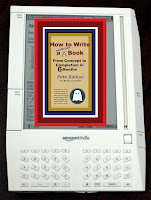
Kindle is Amazon's wireless eBOOK reader, which makes available more than 350,000 books, newspapers, magazines, and blogs. (There are others on the market making a bid to “burn the bookstore down,” in the words of GIZMODO, the gadget blog.) A quick search unearthed digital devices from Sony, Irex, Iliad, Bbook, and Cybook. As a reader, you can download books on Kindle at $9.99 apiece and carry a virtual library around with you in your briefcase.

There had been other forays into the world of digital books years ago. They failed due incompatible hardware and digital platforms and competition that did itself in, but this time it looks like the whole eBOOK industry might just take hold.

That’s good news for readers who can afford the price tag. The least expensive Kindle is $300, and they go up from there. It’s good news for authors, too, since we can digitize our books and sell them in the Kindle store. I was thrilled at that news and immediately attempted to upload my book—attempted and failed. The complexities astounded me. Nothing worked. No format I might have devised could be converted into the format Amazon had invented. No desperate e-mails I sent elicited responses I could figure out or implement. In the interest of full disclosure, I must admit that I never understand any instructions I receive from Amazon. Never.

After much frustration, I did what any sane person would do. I called the only person I know who seems to understand Amazon: Bob Baker, author of 55 Ways to Promote & Sell Your Book on the Internet. He’s also a musician, marketer, and Amazon guru. I nagged. I cajoled. I begged. He finally agreed to help me. I will skip the glitches and give you the gold. Here is how to publish your book on Kindle:

1. First of all, whatever format your book is in, you should ideally convert it to text only and dump the content into a Microsoft Word file. With eBooks, you have to let go of your need to control fonts, sizes, pages numbers, images, etc., mainly because readers can adjust the fonts on their electronic readers (such as the Kindle). So the text flows based on the user's preferences, not yours.

2. Next, go through the file and take out most of the formatting except for very basic attributes like bold, italic, and some larger font sizes for chapter titles and subheads. Be sure to save regularly. (Note: If your book is beautifully designed, this may be hard. But bite the bullet and do it anyway.)

3. Images within Kindle eBooks are tricky. Since the book's cover is on the sales page, it really doesn’t need to be in the eBOOK, itself. But if you want it, you should be able to copy and paste it back into the file. This is true of any other graphics in the original book. (Bob only had text files uploaded to Kindle; I did a lot of cutting and pasting. For some reason, my multicolor cover showed up in black and white; but I was so relieved to finally get it there, I left it alone.)

4. Once you have the formatting to your liking, save your Word file as an HTML web page.

5. Next, go to https://dtp.amazon.com/mn/signin.

6. Log in with your usual email and password, or start an account if you don’t have one yet.

7. Enter your book title, and click the little + sign next to it. Add a description, select genre categories and keywords, and upload a cover image of your book.

8. Then click the + sign next to Upload & Preview Book.

9. Click the Browse button, find your newly converted HTML file, and Upload it.

10. When you've done that and it finishes processing, click the Preview button.

11. To enter or change the price, click the + sign next to Enter Price.

12. Click Save Entries.

13. Click Publish up toward the right to activate the new version and price.

That’s all there is to it. Hard to believe, but true. Just follow the bullet points, and you, too can be a Kindle author. Be sure to preview it online and on a real Kindle, if possible. It’s the surprises that will drive you to distraction.

Thank you, Bob!

Wednesday, September 30, 2009

Writers write ... AND speak


“Writers don’t speak; they write.” I’ve actually said that, and I’m embarrassed to admit it. The context in which I said it had to do with voice activated software. When people have suggested that I talk a book instead of writing one I’ll admit I’ve gotten a bit testy. But in the broader sense, writers must speak, and if you don’t, you are missing a great marketing strategy.

Talking about your book in public forums is effective, personal, and persuasive. It also sells books. If you are one of the many people who fear public speaking or have no idea how to do it, I have eight suggestions. The first is to join a Toastmasters’ group. The other seven follow.

1. It’s all about the audience.
Do your homework. Find out all you can about the group. Every audience is different; there is no one size fits all. Ask yourself what this audience needs and how you can provide it. Even if you have given this presentation before, you can still tailor it to the needs of this particular group.

2. Think it through before you write a single word.
What is your message, the essential idea you want to get across? Write it down in a single sentence. Then, think about the three main points that will support that message. People can usually grasp and remember three ideas, but more than that tends to be confusing. Finally, jot down ideas for stories that will illustrate those points.

3. The opening grabs their attention; the closing gives them something to take away with them.
These are the two most important parts of any presentation. Think of a hot pink thread that begins at the opening, runs through the content, and ends up in a knot at the end. That thread ties your speech together. Write the opening and closing carefully, edit them until they are perfect, and then memorize them until they are as familiar as the Pledge of Allegiance.

4. Content is king.
You know before you begin what your message is going to be. Now, you have to become an expert on that topic. Research it, anticipate questions, and be prepared to answer them in your presentation and in the Q&A, if there is one. If you have thought about the stories you want to tell, this is the time to flesh them out. Look up what others have said, and sprinkle authoritative quotes throughout your talk. With today’s powerful search engines that is easier than it has ever been.

5. Delivery counts.
Your content may be great, but if it is badly presented, no one will ever know. Good delivery is built on self-confidence, comfort with your topic, and contagious energy. These things build on each other and are the result of practice, practice, practice. Do not think you can “wing it.” You can’t.

6. Organization matters.
The key to compelling content and confident delivery is how well organized your material is. Complicated organization may work in print, but it doesn’t in a speech. Keep it simple and straightforward—so simple, in fact, that the audience can almost see your outline as you speak. You don’t have to actually say, “Here is what the speech is about, point one, point two, point three, and here’s how it all ties together” for the audience to know where those headings would be.

7. Be real.
There are two kinds of presentations: performances and conversations. Performances are scripted, stylized, and acted. Conversations engage the audience. Performances make an impression; conversations create a connection. Here are two important questions: What is the purpose of your presentation, and what is your natural style? Do what comes naturally. Any audience can spot a phony, someone who is trying too hard, or a speaker who doesn’t know what he’s talking about. Don’t be any of the above.

If these suggestions seem somewhat familiar, it’s probably because the same rules apply to good writing.

Thursday, September 24, 2009

Meet the Blogging Experts on Twitter


A few experts I follow and thought you might want to, as well.

Denise Wakeman

  • Business blogging & social marketing to help you get more online visibility & opportunities for you & your business. Sometimes tweet abt my running workouts.
  • Location: North Hollywood, United States
  • Web: http://www.denisewakeman.com
  • Twitter: twitter.com/DeniseWakeman

Penny Sansevieri

Bob Baker

  • Author, musician dedicated to showing indie artists how to get exposure, connect with fans, sell more music, and increase their incomes.
  • Location: St. Louis, MO
  • Web: http://www.bob-baker.com/buzz/
  • Twitter: twitter.com/MrBuzzFactor

Remarkablogger

Russ Henneberry

  • Helping tiny business make mighty profits using a personal computer, a little imagination and a few well-placed dollars.
  • Location: Saint Louis
  • Web: http://www.russhenneberry.com
  • Twitter: twitter.com/RussHenneberry

MarketingProfs

  • Head of content, editor, social media, marketing, great food, good wine, writer at www.annhandley.com.
  • Location: Boston, Massachusetts
  • Web: http://www.marketingprofs.com
  • Twitter: twitter.com/MarketingProfs

Guy Kawasaki

  • I am a firehose that answers the question: What's interesting? Co-founder of Alltop.
  • Location: VirginAmerica 2A
  • Web: http://alltop.com/
  • Twitter: twitter.com/GuyKawasaki

Zaibatsu

  • Just a guy who loves Social Media. Want to know what our company does: The 1st Rule of Fightclub: you don't talk about Fightclub
  • Location: Denver
  • Web: http://www.facebook.com/zaibatsu
  • Twitter: twitter.com/zaibatsu

Terri Z Solo

  • Solo entrepreneur, writer, soccer mom, wife, dog-lover, singer. I tweet about online marketing, resources I recommend, world peace and life in general.
  • Location: Cary, NC
  • Web: http://www.solo-e.com/blog
  • Twitter: twitter.com/TerriZSoloCEO

Darren Rowse

Lisa Hanock Jasie

Conniereece

  • Every Dot Connects: communications, marketing, social media with flair. Wisdom that comes w/ age mixed w a youthful attitude of fun. Published writer.
  • Location: Austin, TX
  • Web: http://everydotconnects.com/twitter-welcome/
  • Twitter: twitter.com/conniereece

Mashable

  • The hottest Twitter news, Twitter tips and Twitter help. Plus, the best social media links around!
  • Location: Scotland / SF
  • Web: http://mashable.com
  • Twitter: twitter.com/mashable

Copyblogger

  • Founder of Copyblogger.
  • Cofounder of DIY Themes, Teaching Sells, Lateral Action & two ornery kids.
  • Location: Dallas, TX
  • Web: http://authorityrules.com/
  • Twitter: twitter.com/copyblogger

Tuesday, September 22, 2009

(Not So) Secrets of a Great Website

After years of having what is known as a “billboard in the middle of the Sahara desert”—a website nobody ever saw—I finally did something right. I created a website that does what it’s supposed to do: inform, educate, help, and attract people. I certainly would never claim to have done this alone. I had a great deal of help on the technical and marketing side from an expert who brought me from dark ages into the 21st century.

Change takes place on the Internet faster than the speed of DSL, sound, or light. I am not technologically gifted, to say the least. Nothing about computers, the WWW, RSS, SEO, web design, blogging, podcasting, tweeting, getting around Amazon, or even writing on someone’s wall in FaceBook comes naturally to me. It is not intuitive; it is learned. Then, as soon as I learn something, it becomes obsolete; and I have to learn something newer, more sophisticated, and usually more complicated. It’s a daily battle, but a necessary one if I am to remain competitive in my field.

My website could certainly use improvement, I know. Yet, bells and whistles don’t seem to be the criteria Web surfers demand. The question is what is it that garners good ratings in the search engines; encourages casual visitors to click on links and read articles; e-mail with questions about book coaching, ghost writing, and editing; sign up for a newsletter; or add a book to their shopping carts.

Here are some of the lessons I have learned along the way. An effective website should do the following:

1. Have a clear, consistent theme.
Does your site have a single identifiable message? Will readers get it immediately or feel confused by too much variety? Web surfers have short attentions spans. If they are overwhelmed, they will move on.

2. Be easy to find.

Search engines find your site in many ways, but the most important is keywords. If you want Google or Yahoo to know you can help write or publish books, your site should be liberally sprinkled with keywords, or clues, that lead them right to you.

3. Be easy to get around once someone finds it.
Nothing is as frustrating as being lost in a sea of words and pictures and having no idea how to find the information you want. Your website should not be a scavenger hunt; it should be a transparent map that takes you directly to what you’re looking for.

4. Make sure your links work.
Almost as frustrating as being confused about content is, knowing exactly where you are and where you want to go, clicking on an obvious link, and finding there is no such page, or you ended up on the wrong one. Check your links often.

5. Convey your professionalism, trustworthiness, and credibility.
What does your website say about you? Of course, you would like it to shout out that you are good at what you do, you have experience and expertise, you are the expert the reader has been looking for. How do you do that without actually saying all those things? There is a rule in creative writing classes: show; don’t tell. Make that your mantra.

6. Establish a relationship with the reader.
Web 2.0 is all about relationships. It is no longer a one-way monologue; it is now a dialogue between you and your visitor. Your website is a way to say, “Hi, I’m __________. Let’s get to know each other. What interests you? How can I help? Let’s interact.”

7. Answer the WIIFM (what’s in it for me) question.
This should not be news to you: Your website is not about you; it is about your readers. What do they need and will they find it here? What is the benefit in terms of information, entertainment, enlightenment, or take-aways? Why should they hang around a while?

8. Add new features or update information frequently.
Think about yesterday’s newspaper. It may still have uses, but keeping you up to date on the latest news isn’t one of them. Things are happening in the world and in cyberspace. “Inquiring minds want to know.” So does Google, which thrives on new material.

9. Be packed with useful information.
The Web is the world’s biggest library, the encyclopedia of everything you could possibly want to know. When you stop to think about it, that’s pretty amazing. So, where do you and your little website fit into that enormous picture? You are a source of information someone is looking for. It’s up to you to provide as much as you can.

10. Give stuff away FREE.
Don’t hide your light under a bushel. Let it shine. Then, offer it to your reader. You will make a friend or at least a grateful Web surfer who will return. You cannot give away too much. You know more than you think you know. What good is it if you don’t share it?

11. Avoid being an obvious commercial for products or service.
Few things are more annoying than searching for information and finding, instead, one long ad for something to buy—a training program, a series of videos, books, tricks on how to increase traffic to your blog … you get the idea. These sites have lost sight of rules and 9. Be packed with useful information and 10. Give stuff away FREE.

I didn't learn these common sense rules early or easily. I read them; I heard them; I observed them on other people's websites; and, often, people gave them away for FREE. What a concept.


Tuesday, September 15, 2009

How to Write a Memoir that Sells

I went to a standing-room-only book signing last night. What made it such a wonderful experience was that the book was written by one of my oldest friends—Marianna Riley—and her collaborator, Robert Ellis. The book is Caring for Victor: a U.S. Army Nurse and Saddam Hussein. Ordinarily, this is not a book I would rush out to buy, but with Marianna’s name on the cover, it wasn’t even a question.

Robert Ellis was an army nurse who probably spent more time with Saddam Hussein than any other American. For eight months, Ellis was responsible for the care of the army’s captured Iraqi leaders, but especially for keeping its most valued prisoner, known as Victor, alive and healthy.

Theirs was a complicated relationship. They didn’t talk politics and, in fact, communicated very little at first because of the language barrier. Eventually, though, they found areas of commonality in their lives and forged a bond. In part because of his own background—growing up in the projects in St. Louis—Ellis was able to see the humanity in a man who was thought by many to be a dangerous dictator and a murderer.

Marianna Riley is a consummate pro. She’s been writing a long time for newspapers and magazines and then as an editor and reporter at the St. Louis Post-Dispatch. I have been a fan for years and, in fact, have many of her early articles in my files. She has always had the ability to make a story leap off the page. So, it comes as no surprise that she was able to capture the essence of both of these men and the nuanced relationship they shared.

Caring for Victor is a memoir writing teachers should insist our students read. It’s right up there with The Liars Club, which is among of the best. The book was published by Reedy Press, a St. Louis company, which proves you don’t have to go to New York for find a good publisher. The publicity for Caring for Victor was amazing. The event was in the papers and on every local news channel. There were not enough chairs, barely enough room to stand, and the line to get our books signed snaked around the room.

During the Q&A at the end of the presentation, Marianna talked a little about the publishing process. I had to ask, “How important was the proposal in getting the book published?”

“The proposal was everything,” she answered. “It was so important. We had our outline, and that essentially became the book.”

Since this is my blog, I’m going to take the liberty of repeating that. “The proposal was everything. It was so important. We had our outline, and that essentially became the book.”

My case rests.

Friday, September 11, 2009

Life's Little Disappointments

There are many wonderful quotes about plans that don’t work out. My favorite is "The best laid plans of mice and men gang aft agley" by Robert Burns. (It was written in Scottish.) But I also like my mother’s bit of homespun wisdom: “Man plans; God laughs.” That about sums it up.

I’m waxing philosophical because, once again, due to forces way beyond my humble control, my class in “Writing, Publishing, & Promoting Your Nonfiction Book” has been cancelled, just days before it was scheduled to begin. Apparently, the community college has spent the last couple of days informing eager teachers that too few students registered to make the classes worthwhile.

On one hand, that’s probably good news because it’s hard to adequately prepare for a class with no confirmation that it’s going to be held. Thus, I wasn’t as ready as I would have been under different circumstances.

On the other hand, it’s bad news because I have to tell the wonderful speakers I had booked that I don’t need them. My lineup was the best ever and I’m really disappointed.

I guess it’s both good and bad news because, when I counted up the number of remaining copies of my book, which I planned to give to every student, my stock was running dangerously low. So now, I am several hundred dollars poorer but fifty books richer because I had to order more from the printer.

I could continue to go back and forth with why it’s good news—I’m swamped and this will free up time for my projects, or bad news—teaching is the highlight of each season and I will truly miss it. But why give myself a headache over the vicissitudes of life?

This is merely further proof that everything in life is interconnected. Something happens somewhere (the economy tanks, for example), and many months later, the community college has to cancel classes. People who might have wanted to take those classes are disappointed; speakers who had probably begun to prepare are told to stop; class plans already in the works are shelved; teachers who had new things to say turn their attention to other things; and the community college, which is certainly in need of money, loses out on anticipated revenue.

But it is what it is, a saying I hear frequently and have really come to dislike. Somehow, it just lacks the poetry of "the best laid plans of mice and men gang aft agley.”

They just don’t write lines like that anymore.

Friday, August 14, 2009

Portable Office

Being a compulsive sort of person, when I packed for my “vacation,” the most critical items were computer related—laptop, multiple cords, flash drive, iPod, a USB hub. When I unpacked all of my electronics, my daughter asked, “Where is your ergonomic keyboard?” Nine hundred miles from home is not the time to discover that little oversight. Oh well, the MacBook keyboard if wider than most and really not difficult to use. “It’s all fine,” I said, trying to sound hip. I got by with it.

“Where should I set up my office,” I asked, thinking surely someone would say, “Oh use my desk. I’m not home all day.” No one did. “The kitchen is fine. How about the table?” So, Plan A was the kitchen table. Wrong height. Chair uncomfortable. Hmmm. “How about pillows?” my son in law suggested and plopped a couple behind me. Better. “Or this massaging seat cover?” my daughter offered, setting it up and plugging it in. Nice, but hard to concentrate with that thing hitting me up and down my back.

Plan B was the kitchen counter. It looked like a good height, and the chair was in the right place. So, I spread out all over the kitchen island. Someone who shall remain nameless commented on the mess. In truth, it was pretty bad. Next, I tried my daughter’s office. She had a cute little table that looked perfect. Two hours later, I was all hunched over and had crick in my neck. So much for Plan C.

Plan D was my son in law’s couch, which was good for one afternoon. I used a cutting board for a desk. It worked fine, but by now, my back was in knots. Plan E was my bed with four pillows supporting me. Didn’t work. Way too soft. On the “great room” couch (a Florida term, I think), with my cutting board on my lap and my feet on the bottom of the coffee table, things were looking up. The problem was I stayed in the same position for hours and could barely walk when I got up.

Next and I hope the last stop: back to the kitchen island. But this time, I have the laptop on a phone book, and I am standing. This could really be the solution … except that standing for long periods of time is problematic with a bad back. Maybe, if I put on walking shoes, or stand on a cushion, or take breaks every once in a while, it could work.

My daughter observes my new arrangement. “I don’t understand why you don’t just use my desk,” she says. “It would be SO much more comfortable than that set up.”

Right.

Wednesday, August 5, 2009

A vacation? What’s that?

I’m leaving town, something I do infrequently enough to make it newsworthy. I’d love to say this is an exciting business trip to New York or San Francisco, though frankly flying is such a pain these days, I can’t imagine how a business trip could be exciting. I’d also love to say I’m going somewhere exotic to sit on a beach and sip marguerites, but alas it isn’t that either. The truth is I’m going to visit my daughter, and I plan to work a good part of the time. “Travel light,” she suggested. “Just bring a carry-on.” I laughed. “My entire office is packed in my carry on.” The rest of my belonging are in the heaviest suitcase I’ve ever owned. What was I thinking?

I have told all my clients that this will be my chance to catch up on their projects, thus raising their expectations en masse. “I won’t be distracted,” I insisted, though that may not be entirely accurate. First, there is Milo (the wonder dog), who is the real reason for my trip. If you have ever read one of my blogs, you know all about Milo, so I shall spare you the superlatives.

Second, there is the pool, which is right outside my room; and though I cannot bring myself to swim at home, I cannot miss my daily swim on these annual trips. Third, there are “plans,” apparently lots of them. My daughter keeps sending me e-mails saying how would you like to do this … or go there  … or eat at  … ? And they all sound like fun, so, of course, I say yes. The only thing that augurs well for getting any work done is that my daughter and son in law both have jobs. Of course, my daughter plans to come home for lunch to be sure I’m not lonely. Fitting work into my busy schedule is going to take some planning.

The question is why do I take enough electronics and files with me to keep me busy for life when what I really need is to do nothing? Because I have commitments to my clients. Because I am incapable of doing nothing. And, because I am a workaholic. It’s not that can’t relax. I have also brought half of library of books with me to read during down time.

Years ago, a very good friend told me there are two kinds of people in the world: those who work to live and those who live to work. He was the former; I am obviously the latter. What would I do if I didn’t work? Who would I be if I were not a writer? It is not chic to pose those questions, especially on line (I am assuming here that millions of people are reading my blog), but since bloggers have implicit permission to be candid and truthful, I’m just putting it out there for all the world to read.

Frankly, I don’t have answers to those questions. All I know is that what I do for a living is what I do for fun, for relaxation, for an outlet, for a diversion, and on and on. At this point in my life, I’m not sure I would change if I could.